
Honoring A Life Source
Honoring A Life Source
In Exodus 20:12 we read: "Honor your father and your mother, so that you may live long in the land the Lord your God is giving you."
Not all of our parents were model parents, and many of us have spent years recovering from their brokenness. Still, there is a debt of honor that remains. Not because everything they did was good. But because we are alive through them. They were, however imperfectly, a source of life.
A similar logic applies to the other life sources we encounter along the way. People who opened doors for us when we did not yet have keys. People who made introductions that changed the course of our lives. People who saw something in us before we could see it ourselves, took risks on us, carried our names into rooms we weren't in. Paul once told the Corinthians they had countless guides, but not many fathers. Guides point you somewhere. Parents are the reason you had somewhere to be pointed from. Like our biological parents, these people are not perfect. They may have disappointed us. They may have blessed and wounded us in the same season. But if they brought life to us, that should not be erased.
Honor is more than private gratitude. If someone has helped form an artist, a song, a community, or a movement, that history deserves to be seen. Artists are not raw material for someone else's pipeline, and communities do not give birth to beauty by accident. There are fathers and mothers behind the work, even when they are not visible on stage. You do not simply pluck what is beautiful from that soil and call it discovery.
Every fruit has roots somebody else watered.
Here's what happens when we honor those who have been sources of life to us. And yes, this can include financial honor. In the culture of Jesus, treasure was never treated as neutral.
Our consciences stay tender. Ambition can teach people to forget who helped them, and to believe they got here alone. Honor interrupts that. A numb conscience is often the first step toward shipwreck.
We breathe life into the communities we're part of. Some are shaped by scarcity and quiet scorekeeping. Others are marked by generosity and memory. Blessing others doesn't make us smaller. It makes the room larger.
We recover our dignity. There is dignity in refusing to be the sole author of our own story — in saying, "This person helped me. This person opened a door." That honesty lets us name what was broken without denying what was given.
Yuri Kochiyama wrote something close to this at eighteen years old, long before internment camps, long before Malcolm X died in her arms, long before any of the life that would make her name worth remembering. She wrote that any opportunity, achievement, or happiness she'd have, she'd owe to someone else. And if she couldn't repay the person directly, she'd pass the kindness on to somebody who could use it. She figured that part out before she had anything to be grateful for yet. Most of us figure it out after, if we're lucky, and some of us never do.
And as the Fifth Commandment suggests, honor is connected to life itself. When we honor rightly, something in us stays alive. We stay less brittle, less orphaned, less frantic to prove ourselves.
Honor does not mean denial. It does not mean pretending people were perfect. It simply means refusing to become a thief of your own story. We remember who brought life to us. And where possible, we bless them back. Where we can't, we pass it forward instead.
Malcolm du Plessis
More Blog Posts By Malcolm du Plessis

You’ve forgiven everyone who ever wronged you. Meanwhile, the worst offender is still serving time inside your own head.


The bible is a relay race from one generation to the next — and it is not a story of clean handoffs.



Social justice is trending in Christianity. Sometimes it becomes fashion. Often, it begins as conviction — people trying to make sense of faith in a wounded world.

“Jesus was not results driven. He was always focused on the process and never the outward performance. It is inconceivable to think of him reveling in big outcomes for the sake of influence.” (Malcolm du Plessis)

"We live in a world of leveraging - where people use their platforms and their privileges to get places and get things done." (Malcolm du Plessis)


"Four bible sentiments to consider when collaboration entails negotiating a business agreement." (Malcolm du Plessis)


"The sixties birthed the civil rights and the contemporary worship movements. Sadly, they have run on separate tracks ever since." (Malcolm du Plessis)

"I read this story many years ago. And have read it many times over the years. It has the same effect on me each time I review it." (Malcolm du Plessis)

“The book of John describes the incarnated Christ as being full of GRACE and TRUTH. Inextricably intertwined.” (Malcolm du Plessis)


Honor your father and your mother so that you may live long in the land the Lord your God is giving you.

That less visible space, on the outskirts of Christendom, where unconventional and unlikely candidates do life and mission together in less-formal structures.




"I found this cutting many years ago. No doubt there are countless such stories throughout history. So much food for thought." (Malcolm du Plessis)

"In recent days, when I have listened to worship music, my historic convictions have been freshly reinforced." (Malcolm du Plessis)


As we reflect on the life and legacy of Bishop Tutu, let’s listen to Nontombi and Malcolm …


"It will quickly become obvious to you that Common Hymnal is multi-ethnic." (Malcolm du Plessis)
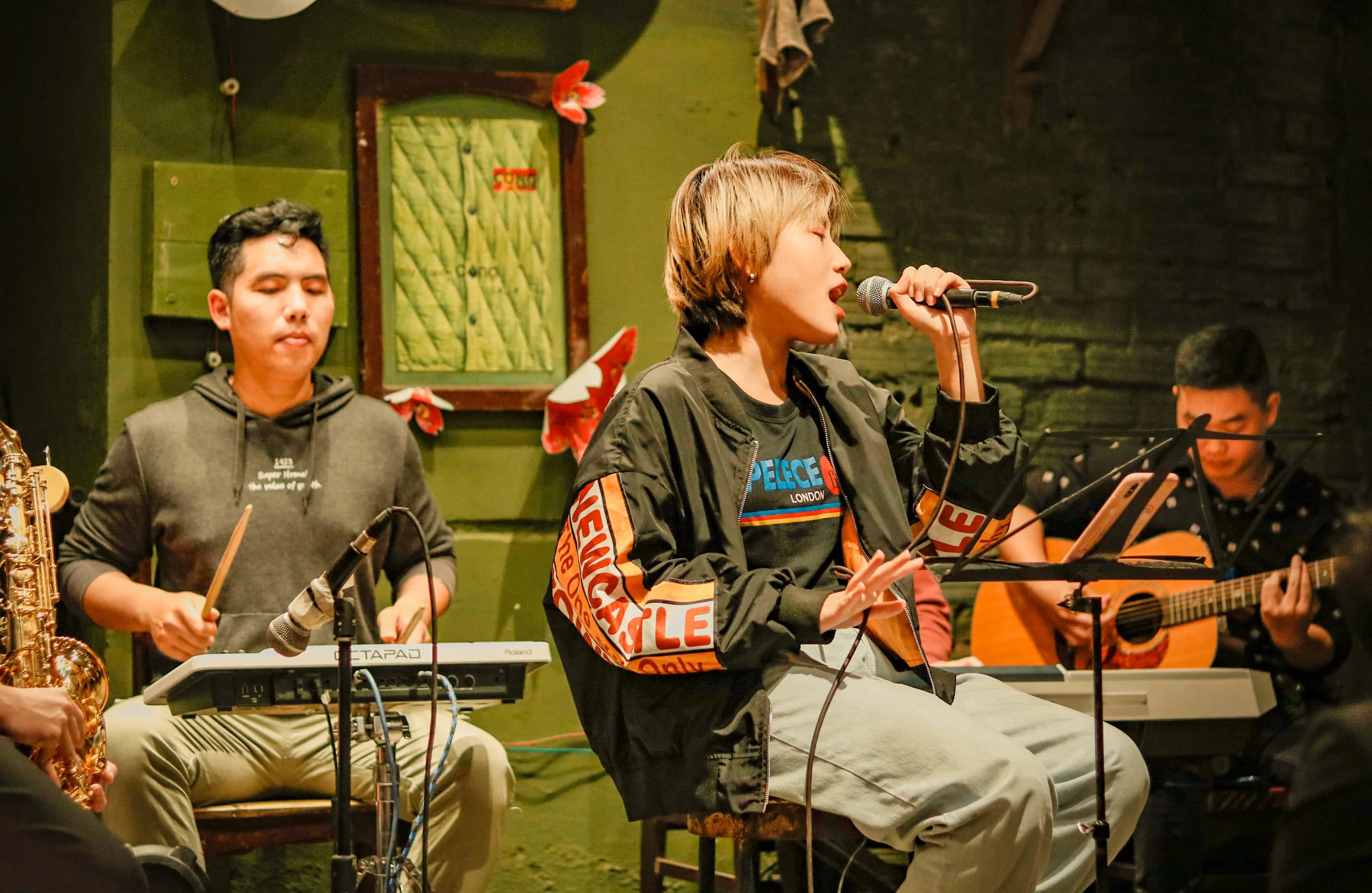
"Make contact with the rest of the team prior to the writing session, identifying a leader to set the stage and guide the team through potential challenges along the way.” (Malcolm du Plessis)

“This business is named “Music Publishing” because of the way that songs were publicized and monetized before the invention of the LP. Back in the day, songs were spread by being transcribed onto sheet music, and printed, promoted and sold by Music Publishers.” (Malcolm du Plessis)

"A friend recently made a tongue-in-cheek comment about the trending theology of contemporary worship: “God is great. And we are great."" (Malcolm du Plessis)

"It has felt, increasingly, like I moved from South Africa to South Africa, excepting, in my old South Africa, we knew we had a problem." (Malcolm du Plessis)