When Culture Stops Carrying Memory, Movements Keep Starting Over
When Culture Stops Carrying Memory, Movements Keep Starting Over
Movements do not become durable through urgency alone. They need culture to carry urgency into memory, meaning, and practice. That is the line I keep coming back to.
Urgency is everywhere right now. Every week brings another ruling, another law, another backlash, another video, another election panic, another reason to gather people and say, "No, seriously, this matters." And it does matter. The urgency is real.
But urgency leaks.
People get tired. The news cycle moves on. The meeting ends. The rally disperses. The press release gets posted, skimmed, and buried under twelve other emergencies and a strangely confident recipe for overnight oats. This is not because people do not care. It is because movements cannot live on reaction alone. They need ways to remember between emergencies. They need songs, stories, plays, rituals, images, films, and performances that help people keep carrying the meaning after the moment has passed.
When culture stops carrying memory, movements have to keep restarting over and over.
I am writing this partly through a South African lens. Not as autobiography but because I grew up close enough to the South African freedom struggle to know this in my bones: music and theatre were not side dishes. They were not the "arts moment" before the serious people came back to the microphone. They were part of the struggle itself.
And I keep wondering why so much justice work in America now seems to treat the performing arts as an optional extra — a nice opener, a special guest, a moving song before the closing prayer, if there is budget, and someone remembers to ask the artists before the flyer is already designed.
This feels like a mistake. Not a small one.
What culture does that politics cannot do on its own
Political work often has to simplify. It needs a demand. It needs a message. It needs a vote. It needs a headline. It needs a clean line people can repeat. That is necessary. I am not against slogans. A good slogan can do a lot of work.
But slogans are not enough, because human beings are not simple. Justice issues are layered. They are not just about one bad law, one bad ruling, one bad leader, one bad institution, or one especially committed man with a microphone and too much self-belief. They are about history, fear, power, economics, religion, propaganda, family stories, social pressure, identity, belonging, resentment, grief, and hope.
You cannot reach all of that with a press release. You can try, but it will be a very long press release. And nobody wants that.
A speech can explain the issue. A song can make people feel why it matters. A play can help them recognize themselves inside it. That is not decoration. That is movement work.
Theatre can get into the psyche. Storytelling can show the complicated streams of thought inside a person. It can show how propaganda works, how fear becomes normal, how people justify things, and how even people trying to do good are sometimes confused, compromised, afraid, proud, wounded, or stuck. That matters. If we want healthy and transformational activism, we cannot only shout the right conclusions. We have to reach the nerve ending where conscience wakes up.
Music does another kind of work. Music can soften people without weakening them. It can comfort the disheartened and embolden the courageous. Some people are barely hanging on. They need comfort. Some people are ready to act. They need courage. Most of us are somewhere between the two, depending on the day, the court ruling, the bank balance, and how much sleep we got.
Music can meet people along that whole continuum. It can help people face tomorrow. And movements need that, because justice work is not one brave moment. It is Monday morning. It is the next meeting. It is the next defeat. It is the next funeral. It is the next court decision. It is the next time you have to explain to people why this still matters.
Rallies need more than speeches
I have been thinking about political rallies, and I want to say this carefully because I have deep respect for the people who organize them. Gathering people in public is hard work. It takes courage, logistics, trust, permits, relationships, timing, security, sound systems, volunteers, speakers, and a thousand details nobody sees. In urgent moments, rallies give people a place to stand together and say, "We are here. We are paying attention. This matters."
That matters.
And often, the format is shaped by necessity. There are many organizations to honor, many constituencies to include, many leaders who need to be heard, and many messages that need to be carried. So the structure becomes familiar: one person speaks for a few minutes, then another person speaks for a few minutes, then another person speaks for a few minutes, and then another person speaks for a few minutes. Each person may be wonderful. The cause may be urgent. The speeches may all be true.
But after a while, even the most committed human brain starts packing its bags. There is only so much spoken urgency people can absorb in one sitting.
That is not a criticism of the organizers. It is a human reality. People need more than information. They need breath. They need rhythm. They need shared feeling. They need a way to metabolize what they are hearing so it does not just pile up as more outrage, more grief, more instruction, more weight.
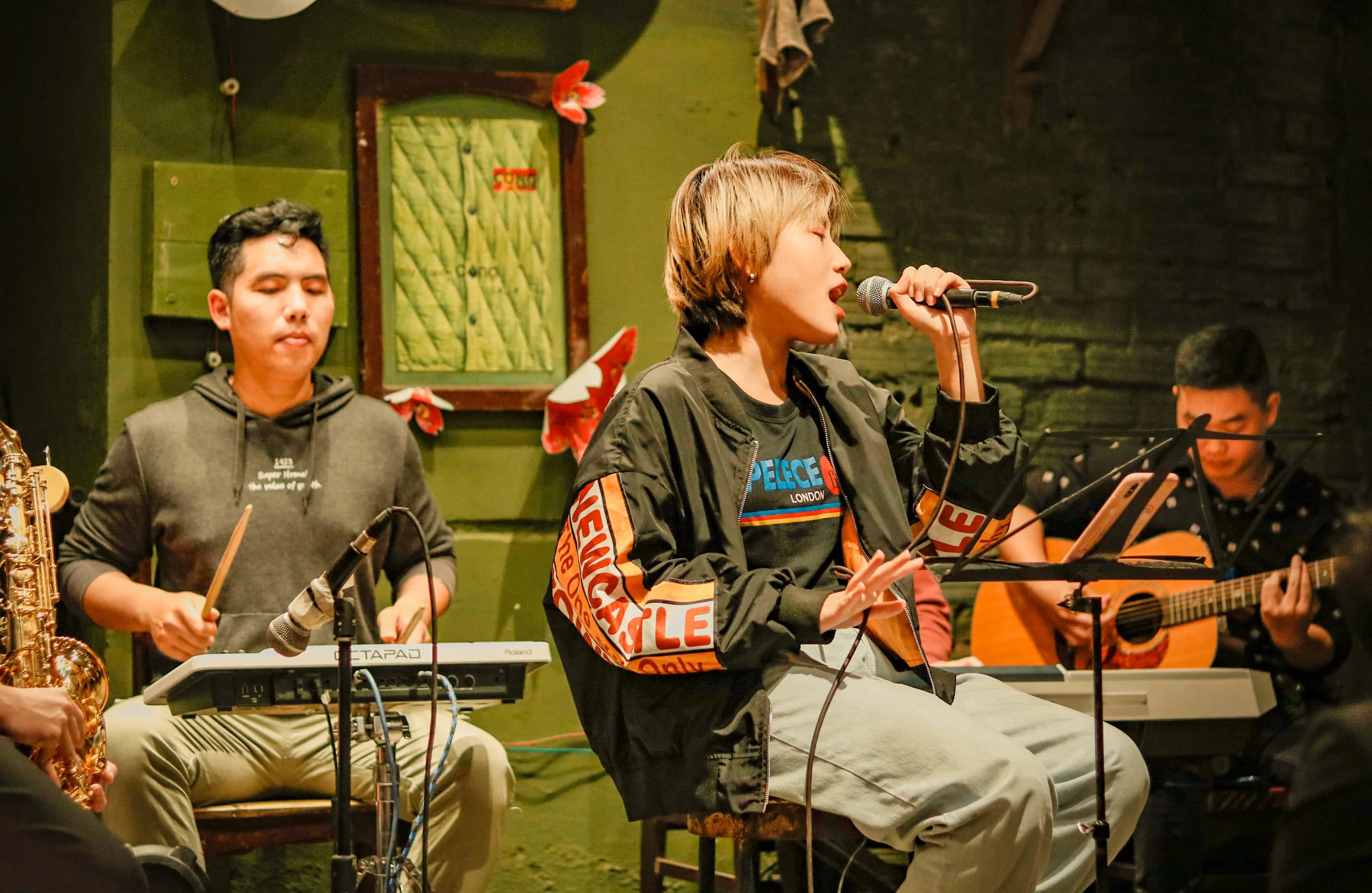
A well-placed song can change the atmosphere in two minutes. It can gather the room. It can break through fatigue. It can give people a shared breath. It can make grief communal. It can make courage feel possible.
There is a role for communal singing — people singing together, not watching someone else perform. That has always mattered. People sing themselves into courage. They sing themselves into belonging. Martin Luther King Jr. understood this clearly. During the Albany Movement, he said freedom songs were playing "a strong and vital role" in the struggle, giving people "new courage and a sense of unity" and keeping hope alive during the hardest hours.
But there is also another kind of song: the crafted song, the song that lands like an arrow, the song that pierces something, the song that says what the room has been feeling but could not yet say. That kind of song is not just a nice addition to a rally. It can deepen what the rally becomes.
Bernice Johnson Reagon, founder of Sweet Honey in the Rock, put it this way: "Music is one of the ways that human beings have of reaching each other — ways that bypass intellectual understanding and go straight to the body, straight to the feeling level." Reagon came out of the civil rights movement and spent her life thinking about music as movement infrastructure. She understood that singing together was not warm-up. It was formation. It changed who you were by the time you left the room.
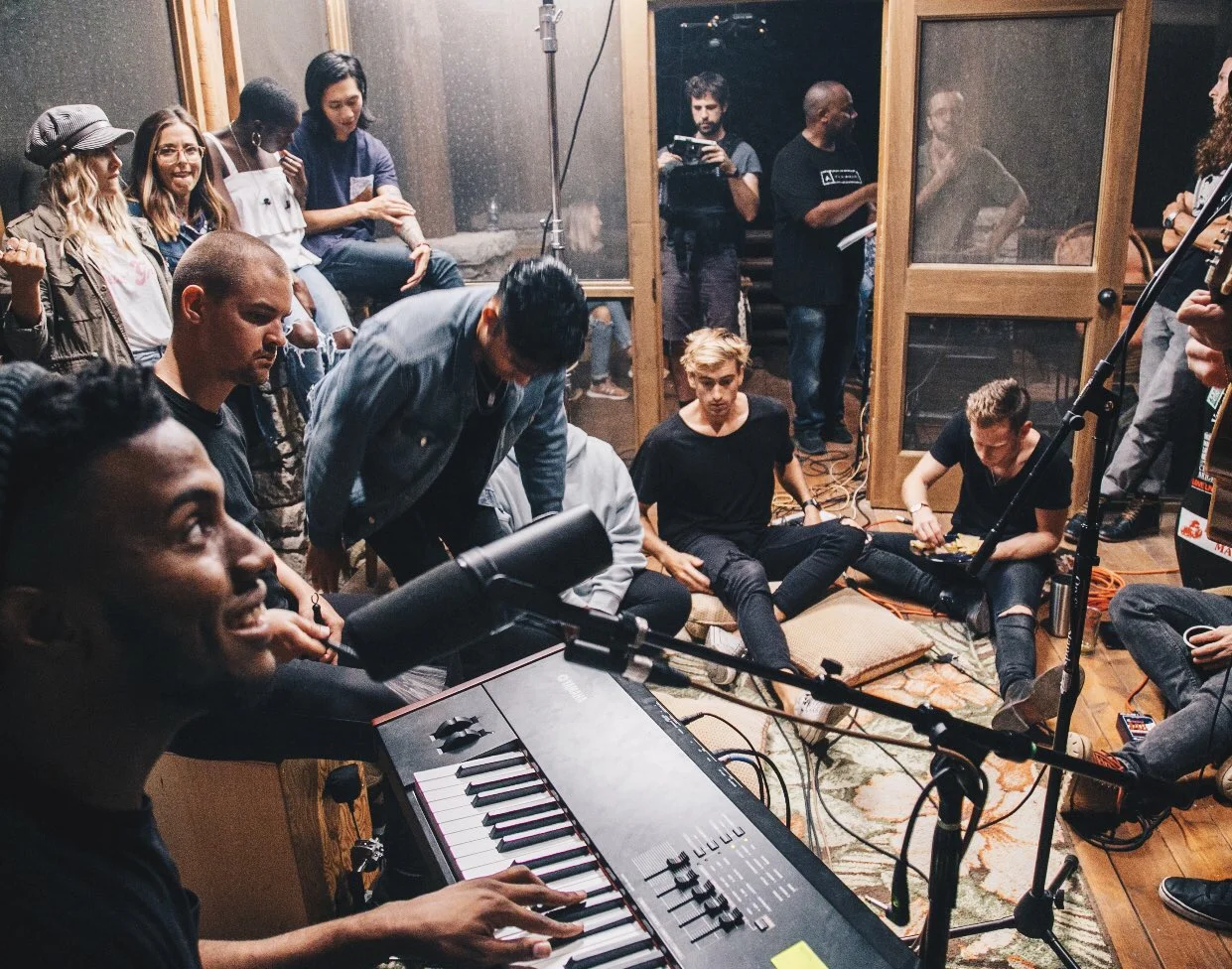
Still, the case is bigger than rallies. Music and theatre belong in the whole ecology of public life: schools, universities, churches, community centers, festivals, theatres, classrooms, conferences, concerts, films, recordings, public rituals, and the everyday places where people learn what to remember and what to care about.
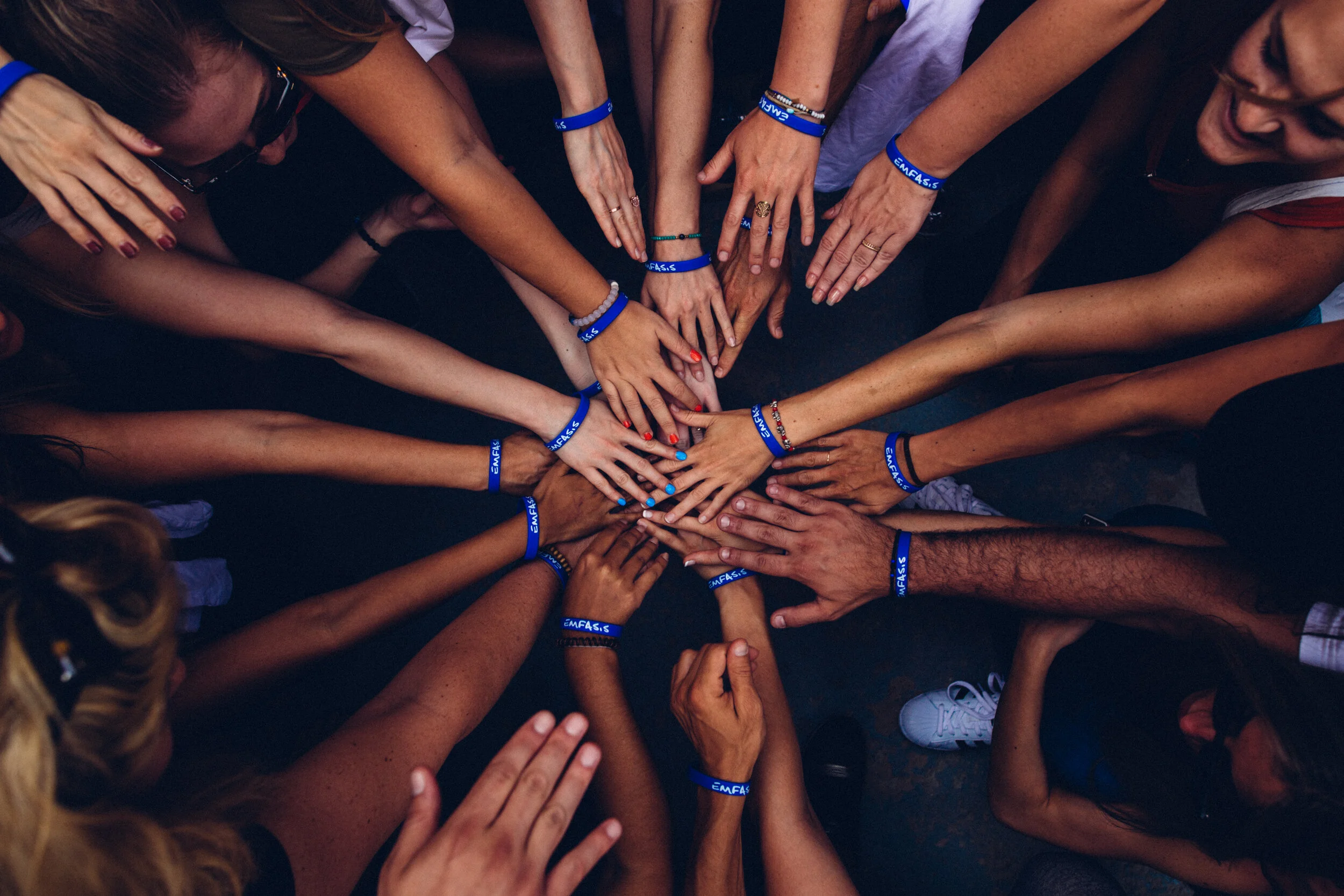
The goal is not simply to give a few artists a bigger platform. The bigger win is when justice-conscious art begins to multiply. A song gets sung in churches. A play gets performed at schools. A theatre department stages it. A community group adapts it. A college class studies it. A choir sings it. A youth group takes it up. A filmmaker references it. A local artist responds to it.
A movement gains a cultural life.
That is when things start to move.
Apartheid South Africa did not just have protest songs. It had a protest culture.
This is where South Africa matters — and where I am writing from some personal experience rather than observation alone.
The South African freedom struggle was not sustained only by speeches and strategy. It was sustained by a dense cultural atmosphere: freedom songs, township theatre, jazz, choral music, exile recordings, church songs, coded lyrics, dance, comedy, satire, popular performance, and plays and musicals that traveled inside the country and around the world.
In September 1988, the apartheid government banned several songs from the music project I had pioneered — a multi-ethnic, multi-lingual band built at the intersection of worship and the justice movement. We were not alone. That same week, songs by Johnny Clegg’s Savuka and PJ Powers were also banned. These were among the country’s most visible multiracial acts, making music across the racial divide at a time when the state needed that divide to hold.
The ban was its own kind of statement. It meant the music was doing something the system needed to stop.
Suddenly we were under surveillance. Many of the white parents who had been letting their kids come to our shows started keeping them away. Everything went onto high alert. The ban was uncomfortable. It was also, in a strange way, confirmation.
But the songs leaked through anyway. The state could block a radio broadcast, but it could not stop music from traveling through cassettes, live performance, word of mouth, and the underground.
Then, in February 1990, the government unbanned the liberation movements and began releasing political prisoners. The cultural weather changed almost overnight. The same broadcasting corporation that had kept our songs off the air gave us a half hour TV special — broadcast, as I remember it, on a Sunday between the Wimbledon men’s final and the World Cup soccer final.
That showcase became the closing of a chapter. We had been a protest band, and our particular work was done for that season. The country was not healed. The work of justice was not finished. But the season had shifted. The specific protest we had been carrying was no longer needed in the same way. What had once needed to travel underground could now stand, briefly and visibly, in the open.
The state tried to silence the music. The music outlasted the state.
That is the point I do not want us to miss: the struggle had a whole cultural atmosphere.
Did music free Mandela?
I have often wondered whether Mandela's release would have happened when it did without the combined force of organizing, boycotts, sanctions, global pressure, and music. I do not mean that music did this alone. History is never that tidy.
Neither music nor theatre freed Mandela by themselves. Neither did sanctions, the armed struggle, internal organizing, international diplomacy, church pressure, student activism, labor organizing, legal resistance, underground networks, mass protest, or the long moral witness of those who kept refusing apartheid when refusal was expensive. But together, these forces made apartheid harder and harder to sustain.
It is fair to say this: the fall of apartheid as a formal system was not only a political achievement. It was also a cultural achievement. Culture helped make apartheid morally visible. It helped make South Africa's struggle portable. It helped people around the world remember Mandela's name, Steve Biko's name, Soweto's name, Sharpeville's name. It gave the boycott movement sound, image, rhythm, story, and emotional force.
Nelson Mandela himself understood the force of music. In Long Walk to Freedom, he wrote that African music can ignite political resolve and that "politics can be strengthened by music, but music has a potency that defies politics."
That is the point. Music did not replace politics. It did something politics could not do by itself. It reached people before they had read the policy. It stayed with them after the speech was over. It made distant suffering feel near. It made moral pressure singable.
So no, music alone did not free Mandela. But it is hard to imagine Mandela's freedom — and the global pressure that helped make it possible — without music, theatre, cultural boycott, and the artists who carried the struggle into the imagination of the world.
I am not suggesting America needs to import a South African model. I am suggesting America already has its own version of this story — and has partly forgotten it.
Miriam Makeba carried South Africa into the world
Miriam Makeba was not only a singer. She was a witness. Her voice carried South Africa into rooms where South African politicians and activists could not always go. She took the sound, language, grief, dignity, and beauty of her people to the world. That mattered.
A policy document can explain apartheid. A singer can make the world feel the human being underneath the policy.
Makeba's life also showed the cost. She was exiled. Her music was political even when she was not singing a slogan. Her presence was political. Her language was political. Her dignity was political. Her refusal to be reduced was political. She did not only sing about the struggle. She embodied it.
That is one of the things art can do. Sometimes the art is political because of what it says. Sometimes it is political because of what it embodies.
Nina Simone and the duty to reflect the times
Nina Simone gave us one of the clearest lines about the role of an artist: "An artist's duty, as far as I'm concerned, is to reflect the times."
She was not saying every artist has to write pamphlets with a melody attached. She was saying artists live inside history. They breathe the same air. They see the same violence. They feel the same grief. They watch the same contradictions. Simone went further: in desperate times, she said, "you can't help but be involved."
To reflect the times is not propaganda. It is honesty.
Simone's work carried rage, beauty, grief, irony, tenderness, exhaustion, and defiance. She did not flatten the struggle into one emotion. That is why her music still matters. It feels human. It feels complicated. It feels dangerous in the best way. Movements need that. They need art that can hold more than one emotion at a time.
Miriam and Nina together
This is one reason the medley Miriam Makeba and Nina Simone recorded in 1990 matters so much. It happened in the wake of Nelson Mandela’s release from prison, at a time when music and movement were inseparable.
Here were two women who had carried different but connected struggles through song. South Africa. America. Exile. Civil rights. Black dignity. Women’s voices. Public courage. Private cost.
That recording was not just a musical moment. It was a convergence. It carried comfort for the disheartened and strength for the courageous. That is what the best movement music does. It does not make struggle feel easy. It makes struggle feel shared.
Common People is now preparing to release a remix-collaboration built from the 1990 recording of that medley, carrying its historic convergence forward in a new form. I do not mention that here as a marketing detour, but because it sits right inside the argument of this piece. This is the arena we are trying to work in: songs as memory, songs as witness, songs as a way of carrying courage from one season into another.
Johnny Clegg and Juluka: the band itself was a contradiction to apartheid
Johnny Clegg and Sipho Mchunu's Juluka were another kind of witness. Their interracial collaboration was a direct contradiction of apartheid logic.
The threat was not only the lyrics. The threat was the friendship. The sound. The bodies on stage. The languages together. The Zulu dance steps. The fact of Black and white musicians making something together in public when the state was built to keep them apart. Juluka did not just sing about another South Africa. They enacted one.
Sometimes art gives people a preview of the future before the law has caught up. That is powerful. Every movement needs glimpses of the world it is trying to build. Otherwise people only know what they are against. Art can help people feel what they are for.
Hugh Masekela and the sound of return
Hugh Masekela deserves his own mention here. His trumpet did not merely decorate the struggle; it carried exile, longing, defiance, grief, and joy in the same breath. "Bring Him Back Home," written for Nelson Mandela while Masekela was in exile, became one of the great anthems of the anti-apartheid movement. It did what movement music so often does at its best: it turned a political demand into something people could sing, remember, and carry.
"Release Mandela" could have remained a slogan, a campaign demand, a line on a poster. Masekela made it musical. He made return feel imaginable. He made the future sound like it was already walking toward us.
That is culture doing movement work.
And of course, the soundscape was much wider than the few names that travel most easily in American memory. Stimela and Ray Phiri carried township soul, rock, and social commentary with songs that could be musically sleek and politically charged at the same time. Ladysmith Black Mambazo carried Zulu choral music into global consciousness, even as their work with Paul Simon became part of the complicated Graceland debate. Mahlathini and the Mahotella Queens, the Soul Brothers, Bayete, and others helped create the larger musical atmosphere in which South Africans heard themselves, remembered themselves, danced, grieved, endured, and imagined life beyond apartheid.
That matters because movements are not carried by a few iconic anthems alone. They are carried by whole soundscapes.
Paul Simon's Graceland: complicated, but still revealing
Paul Simon's Graceland is a more complicated case. It was controversial because of the cultural boycott. Some people felt Simon should not have gone to South Africa. Others felt the album gave Black South African musicians global visibility and helped the world hear something it might not have heard otherwise.
I do not think we have to flatten that complexity. In fact, the complexity proves the point. Music mattered enough to argue about. Nobody was saying, "Well, it is just music." They knew it was not just music. It involved visibility, money, power, collaboration, boycott strategy, cultural ownership, international attention, and the global imagination around apartheid.
That is what culture does. It creates stakes. And it raises questions movements have to take seriously: Who gets the platform? Who gets paid? Who tells the story? Who benefits? Who is centered? Who is used? Who is protected?
Those are not reasons to avoid cultural work. They are reasons to do it carefully.
Global songs and international pressure
The anti-apartheid struggle also moved through global popular music. Stevie Wonder spoke out against apartheid and dedicated his Oscar to Nelson Mandela. South Africa banned his music. That tells you something. When regimes start banning songs, they are admitting that songs have power.
Peter Gabriel's "Biko" carried Steve Biko's name around the world. Sting wrote "They Dance Alone" about Chilean women dancing in memory of the disappeared. Artists United Against Apartheid recorded "Sun City," refusing to perform at the resort that symbolized cultural complicity with apartheid.
These songs did not end apartheid by themselves. Of course not. But that is the wrong standard.
A song does not have to do everything to do something.
Songs can help create moral pressure. They can educate people who were not paying attention. They can make a name unforgettable. They can turn a faraway injustice into something that enters the bloodstream of another society. That matters.
The Market Theatre: a building that became a movement instrument
The Market Theatre in Johannesburg is one of the clearest examples of theatre functioning as movement infrastructure. Founded in 1976 by Mannie Manim and Barney Simon, in the same year as the Soweto uprising, it became known as South Africa's "Theatre of the Struggle." The Market Theatre's own materials describe Barney Simon as holding the conviction that "culture could change society," and name the Barney Simon Theatre as the "Home of Protest Theatre." That phrase is not sentimental. It is accurate.
The Market was not only a venue. It was a place where artists could gather, rehearse, experiment, risk, and speak. It became a center. But the power was not limited to the building. The plays traveled. The actors traveled. The stories traveled. The ideas traveled. That is the point: culture moves. A play can start in one room and end up changing conversations across a country. A theatre can become a launchpad. A story can become portable.
The Market also reminds us that institutions matter. Movements need places where artists can work. Not just appear at the end of the program and sing one song before the "serious people" come back to the microphone. Artists need rooms. They need time. They need collaborators. They need risk to be protected. They need stages where complexity is allowed. The Market Theatre helped make that possible.
And it is worth remembering that the Market was not carried by one or two heroic men alone. Its founding and ongoing life included women such as Vanessa Cooke, Janice Honeyman, Aletta Bezuidenhout, Judith Cornell, Leoni Hofmeyr, Sue Kiel, Lindsay Reardon, and many other actors, directors, writers, designers, producers, technicians, and workshop theatre practitioners. That matters too. Cultural movements are not sustained only by the names that travel most easily. They are sustained by whole communities of people who build the rooms, hold the process, develop the language, take the risks, and keep the stage alive.
Athol Fugard and the daily cost of injustice
Athol Fugard's plays did not merely say apartheid was bad. They showed what apartheid did to people.
That is different.
Theatre can show the daily cost of a system. The small humiliations. The compromises. The silences. The fear. The way people shrink. The way people survive. The way people love each other badly under pressure. The way injustice enters a room and rearranges everyone in it.
Fugard's work was threatening enough to be monitored. The apartheid government surveilled him and revoked his passport. A speech can say a system is dehumanizing. A play can make you sit with a dehumanized person until you can no longer avoid the truth. That is why theatre matters. It slows people down enough to see.
Woza Albert!, Mbongeni Ngema, and the holy imagination of protest theatre
Then there is Woza Albert!, created by Percy Mtwa, Mbongeni Ngema, and Barney Simon, which may be one of the clearest examples of theatre doing what a speech cannot do. The play imagines Christ returning to apartheid South Africa as a Black South African man.
Not Christ as an abstract religious symbol floating politely above history. Christ with a body. Christ with a race. Christ with a passbook problem. Christ entering the machinery of apartheid and exposing the whole thing as morally obscene.
That is a brilliant theatrical move. It takes theology, satire, politics, absurdity, humor, and judgment and puts them on stage together. It asks a question a sermon could ask, but theatre makes you feel it in your stomach.
If Jesus came back into this system, would the system recognize him — or arrest him?
That is not a slogan. That is a bomb with jokes in it.
Mbongeni Ngema's later work on Sarafina! carried another part of the struggle onto the stage. It did not treat the Soweto uprising as a history lesson alone. It gave it students, songs, classrooms, fear, courage, grief, dance, and young people trying to imagine freedom under impossible pressure. After Ngema's death, President Cyril Ramaphosa said his productions "took South Africa and our continent into the theatres, homes and consciousness of millions of people around the world." That matters because movements need more than information. They need memory with a pulse.
And jokes matter too. Humor can get past defenses. Satire can expose absurdity. Laughter can make fear loosen its grip for a moment. Then, once people are laughing, the truth walks in the door. That is theatre at its best. It can tell the truth sideways.
Pieter-Dirk Uys and satire as public truth-telling
Pieter-Dirk Uys belongs in this conversation because satire was another way South African artists told the truth sideways. Through his one-person performances and his famous alter ego Evita Bezuidenhout, Uys mocked apartheid's racial logic, political language, fear, hypocrisy, and self-importance from inside the absurdity of the system itself. That kind of comedy can be more dangerous than it looks. It lets people laugh, but the laughter is not escape. It is recognition.
Uys once said, "You can't do a political play and change the world but you might be able to change the people who could change the world." That is exactly the scale at which culture often works. Not magic. Not instant transformation. But the slow conversion of perception, courage, and conscience.
Satire can do what a lecture often cannot. It exposes the ridiculousness of what power has trained people to treat as normal. It gives the audience just enough distance to see the machinery more clearly. Sometimes laughter is the crack in the wall where truth gets in.
Gibson Kente and popular theatre
Gibson Kente is important because he reminds us that socially conscious art does not have to be elite. It can be popular. It can have music. It can have humor. It can have melodrama. It can have rhythm. It can meet ordinary people where they are. It can draw crowds. It can be emotionally direct.
Sometimes people make the mistake of thinking "serious" art has to be difficult, bleak, and inaccessible.
No.
Some of the most powerful movement art is popular. It is singable. Repeatable. Performable. Quotable. Adaptable. If justice art cannot travel, it is not doing all it can do.
Theatre communicates nuance
This may be one of the strongest arguments for theatre: it can communicate nuance without losing moral force. That is not easy. Political messaging often needs clean lines. And sometimes clean lines are necessary. But life is not always clean. Movements also need places where contradiction can be told without losing moral clarity.
Theatre can do that. It can show fear, compromise, cowardice, courage, confusion, propaganda, grief, ego, love, and awakening all in the same room — which is inconvenient, but also, you know, life.
Theatre can show how people become complicit, how propaganda works, how fear gets inherited, how power seduces, how activists burn out, how families divide, how good intentions become control, how people change slowly, and how courage is born in ordinary people.
It can also speak to people at different stages of the journey. Not everyone is ready for the same sentence at the same time. Some people need confrontation. Some need invitation. Some need to grieve. Some need to repent. Some need courage. Some need to laugh so they do not collapse. Some need to see themselves before they can change. Storytelling can do that. It can reach the point of activation.
Peter Brook once said that "theatre is the place society goes to talk about what it can't talk about." That captures something essential. Theatre creates a protected space for dangerous honesty.
The same pattern shows up everywhere
This pattern is not only South African. Across the world, songs have again and again helped movements carry memory, courage, and moral pressure. Billie Holiday's "Strange Fruit," written by Abel Meeropol and recorded by Holiday in 1939, made lynching impossible to keep abstract; it forced listeners to hear racial terror as something bodily and unbearable. Woody Guthrie gave American labor, poverty, and anti-fascist song a durable folk language, even turning his guitar into a kind of public statement with the words "This machine kills fascists."
Pete Seeger helped make communal singing central to labor, civil rights, and peace movements. As he put it, "No one can tell what a song can do." Sam Cooke's "A Change Is Gonna Come" became one of the defining songs of civil rights hope, while Curtis Mayfield's "People Get Ready" and "Keep On Pushing" gave the movement spiritual propulsion. Marvin Gaye's What's Going On made war, racism, poverty, police brutality, ecology, and urban suffering feel intimate rather than distant. Bob Marley carried anti-colonial, Pan-African, spiritual, and liberation themes into global popular consciousness, insisting in "Redemption Song" that people must emancipate themselves from mental slavery. Fela Kuti made Afrobeat a fearless vehicle for anti-corruption, anti-military, anti-colonial critique — music as groove, protest, satire, and public confrontation all at once.
The lineage keeps widening. Victor Jara's songs became inseparable from Chilean struggle and social justice, and his martyrdom only deepened their force. Joan Baez brought civil rights, antiwar, labor, and human rights songs into public movement spaces. Odetta, whom Martin Luther King Jr. called "the Queen of American Folk Music," gave the civil rights era one of its great voices. Tracy Chapman wrote poverty, domestic violence, racism, and moral conscience into songs so plainspoken they felt almost impossible to dodge. U2 and Bono carried human-rights and humanitarian concerns into the mainstream at arena scale, even if that work operated more institutionally than from the grassroots. Kendrick Lamar has brought Black interiority, policing, trauma, faith, survival, and protest into the center of contemporary popular culture.
These artists are very different from one another. That is the point. Movement music has never had one sound. It has had many sounds, many strategies, many rooms, many risks. The shared thread is that the songs helped people remember what power wanted them to forget.
August Wilson: making America see
August Wilson helps us avoid a trap here. The point is not to turn every artist into a slogan machine. Wilson said he did not write mainly to effect social change, though he believed writing could do that. He wrote as an artist. But he also said all art is political because it serves someone's politics. His plays gave audiences a different way to look at Black Americans, including people they might otherwise ignore in daily life.
That is not propaganda. That is seeing.
Wilson's plays did not lecture America about Black life. They made America sit in a room with Black people it had trained itself not to see. That is different. And often more powerful.
Lorraine Hansberry: making the issue breathe
Lorraine Hansberry did not have to write a speech about housing discrimination. She wrote a family. She wrote a living room. She wrote dreams under pressure
And because she did, America had to look at housing, race, dignity, money, family, gender, and aspiration through people rather than policy language. A Raisin in the Sun became the first play by a Black woman produced on Broadway, and its importance has only grown with time.
That is what theatre does when it is working. It makes the issue breathe.
Annoying for people who prefer issues not to breathe. Very helpful for everyone else.
James Baldwin: the artist as spiritual historian
James Baldwin gives us one of the best phrases for this whole argument: the artist as an "emotional or spiritual historian." Movements do not only need someone to record what happened. They need someone to tell us what it felt like to be alive while it was happening. That is how memory becomes human. That is how the next generation inherits more than dates and slogans.
Baldwin is often quoted as saying that the role of the artist is like the role of the lover: "If I love you, I have to make you conscious of the things you don't see." That is not flattery. That is love with a flashlight. And possibly a bill for emotional damages.
Lynn Nottage: the little pinpricks
Lynn Nottage's Sweat is a powerful example of theatre doing what policy analysis alone cannot do. A policy paper can explain deindustrialization. Sweat shows you what it does to a friendship.
Nottage has said she does not think it is the artist's job to come up with solutions — that is what politicians and social scientists are for — but artists can reflect and raise questions. Her work reminds me that art does not always have to arrive as a hammer or a bullhorn. Sometimes it works through little pinpricks — the small disturbances that make people sit up and ask harder questions
That is a useful image: the little pinpricks. Sometimes the pinprick is what gets through.
Anna Deavere Smith: theatre as civic encounter
Anna Deavere Smith's documentary theatre gives another model. Her work is not theatre as escape. It is theatre as civic encounter. She has spoken about using the "convening power of the theater" to get strangers talking about education, race, inequality, violence, and what they themselves might do. That phrase matters: convening power.
Theatre does not only present a story. It gathers people around a story and then leaves them sitting near each other afterwards. Which is risky. They may have to talk. Worse, they may have to listen.
Suzan-Lori Parks: hearing the bones sing
Suzan-Lori Parks gives us a beautiful way to think about theatre and memory. She has spoken about theatre as a place to "make" history, especially when African American history has been unrecorded, dismembered, or washed out.
She describes the playwright's work as digging for bones, hearing "the bones sing," and writing it down. That is not a small image. That is culture as resurrection work. Not resurrection as slogan. Resurrection as excavation, listening, memory, stage lights, and someone in row G trying not to cry too loudly.
Ava DuVernay: story as power
Film has become one of the major storytelling forms of our time. Ava DuVernay's work matters because it turns systems into stories without losing the systems. Selma, 13th, When They See Us, and Origin all show how film can connect personal lives to historical structures.
DuVernay has said, "Storytelling is power. And power makes people uncomfortable." That is why film matters. Systems are abstract. They hide behind paperwork, court language, bureaucracy, and phrases that sound neutral. Film gives systems faces.
A statistic can inform you. A story can follow you home
Very rude of it, frankly
Bryan Stevenson: changing the story underneath the law
Bryan Stevenson keeps saying we have to change the narratives underneath the issues. That is exactly right. Bad policy usually has a story underneath it. A story about who is dangerous. Who is lazy. Who belongs. Who does not. Who deserves mercy. Who does not. Who is innocent. Who is threatening. Who is worth saving. Who can be sacrificed.
Stevenson has argued that we have to change the narratives that give rise to harmful policies, including the false narratives that have shaped how America treats children, incarcerated people, and Black communities. Change the law, yes. But if the story underneath the law stays alive, it will simply grow another law.
Like a weed. With a lobbyist.
Barry Jenkins: refusing to let systems erase persons
Barry Jenkins gives another model. With Moonlight and If Beale Street Could Talk, he does not make films that scream their politics at you. He lets tenderness do some of the work. He lets beauty do some of the work. He lets silence do some of the work
And somehow, when the story lands, the system is still there in the room. That is art doing what art does best: refusing to let systems erase persons.
Broadway and the public imagination
Broadway is not the whole theatre world. Obviously. It is expensive, strange, commercial, and occasionally behaves as if the average human family has seven thousand dollars set aside for mezzanine seats and parking.
But Broadway matters because it can move certain stories into the public imagination at scale. Angels in America carried AIDS, grief, sexuality, theology, politics, and national identity into the mainstream. for colored girls who have considered suicide / when the rainbow is enuf gave Black women's interior lives a form that was poetic, embodied, communal, and impossible to reduce. Hamilton reshaped how millions of people talked about American founding mythology, immigration, ambition, race, and history — even when people argued with it.
And argument is part of the point. Culture creates public conversation at a scale most white papers can only dream about while looking sadly at their download numbers.
The Harlem Renaissance and cultural self-definition
The Harlem Renaissance is deeply relevant here. It was not only an artistic flowering. It was a cultural act of self-definition. Black writers, musicians, actors, dancers, painters, and thinkers were refusing the stories America had told about them. They were making beauty, complexity, style, intellect, pleasure, grief, humor, and modernity visible.
That matters for justice movements. A people cannot only be represented by their suffering. They also need art that shows their fullness. The Harlem Renaissance helped create a cultural confidence that fed political imagination. Jazz clubs, poetry, theatre, literature, visual art, and social gatherings all became part of a larger re-narration of Black life.
Even Harlem rent parties are relevant in their own way. They were practical — people needed to pay rent. But they were also cultural spaces. Music, dance, community, survival, mutual aid, and joy were happening in the same room. Sometimes the movement is not only in the march. Sometimes it is in the room where people keep each other alive.
The U.S. Civil Rights Movement understood this
The American civil rights movement understood the role of song. Freedom songs were not entertainment before the meeting began. They were part of the meeting. They were how people became brave enough to do what needed to be done.
King's language bears repeating: freedom songs played "a strong and vital role." They gave people courage and unity and kept hope alive. That is not a small claim. People were facing jail, violence, economic retaliation, humiliation, and death. And songs helped them keep going.
Again, the point is not that songs replaced strategy. The point is that songs helped people survive strategy. Organizing is hard. Courage leaks. Hope leaks. Attention leaks. Songs help refill the room.
Malcolm X and cultural revolution
Malcolm X understood that the struggle was not only political. It was cultural. He spoke about the need for a cultural revolution to "un-brainwash" people.
That language is sharp, but he was naming something real. Oppression does not only control institutions. It colonizes imagination. It teaches people what to think of themselves. It teaches lies about history, beauty, intelligence, power, and belonging. So liberation has to involve more than policy change. It has to involve the recovery of memory, dignity, and self-understanding.
That is cultural work. Music, theatre, storytelling, film, dance, poetry, and visual art all help people recover what propaganda tried to steal.
What performing arts can do
So what do performing arts do for movements? A few things.
They change the atmosphere. The right song, in the right moment, can do in three minutes what twelve speeches are still circling forty-five minutes later. They carry memory. Songs and plays keep events from disappearing when the news cycle gets bored and wanders off to the next fire. They enter the psyche. Theatre can show where propaganda, fear, shame, hope, and contradiction actually live.
They communicate nuance. Not everything can be handled by a slogan. I love a good slogan. But slogans do have their limits. They are not therapy. They are not novels. They are not plays. They are slogans. They make courage communal. Music helps people feel that they are not carrying the struggle alone. They give movements a language people can carry. A melody, a line, an image, a scene — these things travel.
They multiply. A song can be sung anywhere. A play can be licensed, staged, taught, adapted, argued with, and passed on. They make the future imaginable. Movements cannot only describe what they oppose. They have to help people feel what another world might be like.
So why does this feel less central now?
That is the question I cannot shake. Why do many justice spaces, often for understandable reasons, still end up treating music as a nice opener, theatre as a special event, artists as occasional guests, and storytelling as something the communications team does after the lawyers have finished talking?
I do not ask that as an accusation. There are reasons. The economics of music are brutal. Theatre is expensive. Touring is harder than people imagine. Streaming has trained us to think songs appear out of nowhere for almost no money. Artists are under pressure to feed platforms, build brands, avoid controversy, and survive. Movements are under pressure to respond quickly, raise money, win cases, manage crises, and keep the lights on.
Everybody is tired. Everybody has a spreadsheet. Everybody has a group chat they are pretending not to see. Still, the question remains: if earlier movements understood culture as essential, why have we allowed it to become optional?
The case
So the case is simple. Not small. But simple.
If we want justice movements to become durable, we need to recover the role of performing arts. Not as filler. Not as entertainment before the real program starts. Not as a celebrity endorsement. Not as a mood-setter while people find their seats.
But as a central part of how movements gather, remember, interpret, grieve, imagine, and endure.
This is the arena where Common People is trying to work: not art as decoration, and not activism stripped of beauty, memory, and song, but culture as one of the ways justice becomes durable. We are not interested in boasting about our own role in that story. We are interested in learning from the long tradition of people who understood that songs, stories, stages, films, rituals, and performances can help a movement remember what it is fighting for and who it is trying to become.
We need communal songs and crafted songs. We need theatre that can handle contradiction. We need stories that can travel. We need film that can humanize systems. We need public rituals that keep memory alive. We need school productions, university stages, community theatres, Broadway and off-Broadway, church basements, gymnasiums, festivals, classrooms, choirs, concerts, and rooms where people can gather around something more durable than the latest emergency.
We need work that comforts the disheartened and emboldens the courageous. We need work that communicates nuance. We need work that can pierce the human psyche without flattening the human being. We need work that carries urgency into memory, meaning, and practice.
The state banned our songs in September 1988. The songs leaked through anyway. And when the ban finally lifted — when the political prisoners were freed and the parties were unbanned — the broadcaster that had silenced us gave us a final show. Broadcast between the Wimbledon final and the World Cup final. One of the largest television audiences in the country.
The state tried to silence the music. The music outlasted the state.
Because when culture stops carrying memory, movements keep starting over.
And we do not have time to keep starting over.