Dream vs Incarnation Culture
Dream vs Incarnation Culture
I’ve been thinking a lot recently about America’s culture of dreaming and the contrast between that and the doctrine of incarnation.
Incarnation is the Christian claim that God became flesh—not as an idea floating above the world, but as a body inside it.
When I use the word “dream” in this piece, I don’t just mean having hopes or goals. I’m not only talking about the American Dream in the old grand sense of the word: the house, the fence, the good job, the upward path. I mean the culture of dreaming itself. The habit of living in an imagined future. The belief that the life we were created for is somewhere ahead of us. If we can just get there, become that, achieve this, then everything will finally make sense.
In this culture, people are taught from a very young age that they can be anything they want to be. “Dream big.” “Follow your dreams.” “Manifest your future.” That language is so common it almost becomes invisible.
I wasn’t raised in a culture where dreaming was central. Growing up in a different part of the world, my parents never really talked to us kids about dreaming. Not once, really. They never sat us down to tell us we could be anything we wanted to be. They never encouraged us to imagine a future version of ourselves and then chase it. They taught about responsibility, faithfulness, and doing what was in front of us. They taught us that life is tough and that when good days come through some fortuitous series of events, you cherish them and stay grateful.
That did not leave us without vision. But it did help us learn something about the difference between vision and fantasy.
Vision pays attention to what is real and asks what faithfulness looks like inside it. Fantasy asks us to become emotionally attached to a life that does not yet exist.
The trouble is that imagined futures have a way of shifting just out of reach.
Dream culture works a little like Vegas. It can always point to a person who won. Someone really did hit the jackpot. Someone really did get discovered, land the deal, and become wildly successful. That is what keeps everybody at the table. The possibility is real enough to keep hope gambling, but rare enough to keep most people restless.
Hope deferred makes the heart sick.
I wonder how much of our cultural anxiety, disappointment, and exhaustion comes from living inside dreams. We keep investing ourselves in futures that never fully arrive. A person can be surrounded by opportunity and still feel haunted by the life that keeps staying just out of reach.
Dreams are wonderful motivators. They are terrible homes.
Incarnation moves us in a different direction. God does not save the world by escaping it. He enters it. The Word becomes flesh. God takes on a body, a hometown, a language, a family, and a history. He becomes present, not someday, but now.
Incarnational culture has room for small things. Wendell Berry has that beautiful phrase, “think little,” and I think that is part of what incarnation asks of us. Not little as in timid. Little as in close enough to touch. Close enough to know the names. Close enough to notice who is tired, who is grieving, and who is trying to keep going.
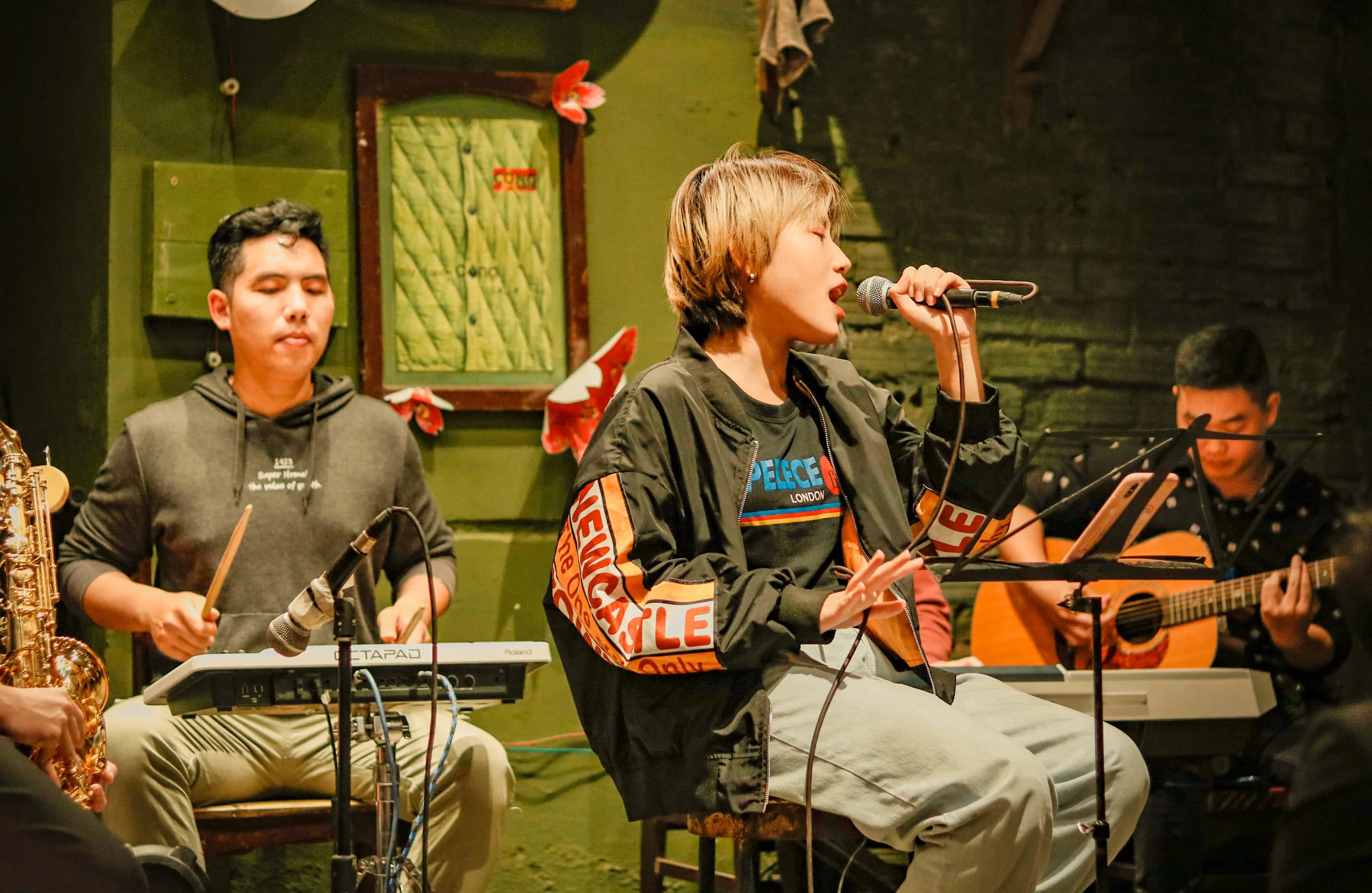
Dream culture trains us to measure impact by scale. How many people saw it? How far did it travel? Did it trend? Did it grow? Incarnation lets one hour with one person matter without needing to become content, strategy, testimony, or proof that our lives are working. A conversation. A meal. A visit. A song sung in a room that will never go viral.
Of course things sometimes catalyze. A song travels. A moment opens. A small act becomes larger than anybody expected. Sometimes people are simply in the right place at the right time, and the machinery of the world happens to reward them.
Capitalism cannot create a world where everybody becomes unbelievably rich and famous. Hierarchy is not a glitch in that system. It is one of the core ingredients. Someone gets the jackpot because most people do not.
That is not the same thing as meaning. Meaning is often much closer than that. It is in the meal, the visit, the conversation, the song sung in a room that will never go viral, the neighbor who needed someone to stay a little longer. It is in the small investment where you can actually see good being done.
Dreaming asks, “What could this become?” Incarnation asks, “Who is here?”
One trains us to evaluate everything according to its future potential. The other teaches us to receive the present moment as a gift.
Maybe that is why Jesus talks so much about daily bread. Not future bread. Not the bread that arrives when all our dreams come true. Daily bread. Enough for today. Enough to keep us rooted in reality. Enough to keep us human. The Word became flesh and dwelt among us.
It turns out reality is not a consolation prize.
Malcolm du Plessis.